TeamTake editorial
How to Evaluate a Youth Hockey Coach Before Joining a Team
LivelyHeron705 · Published · Updated
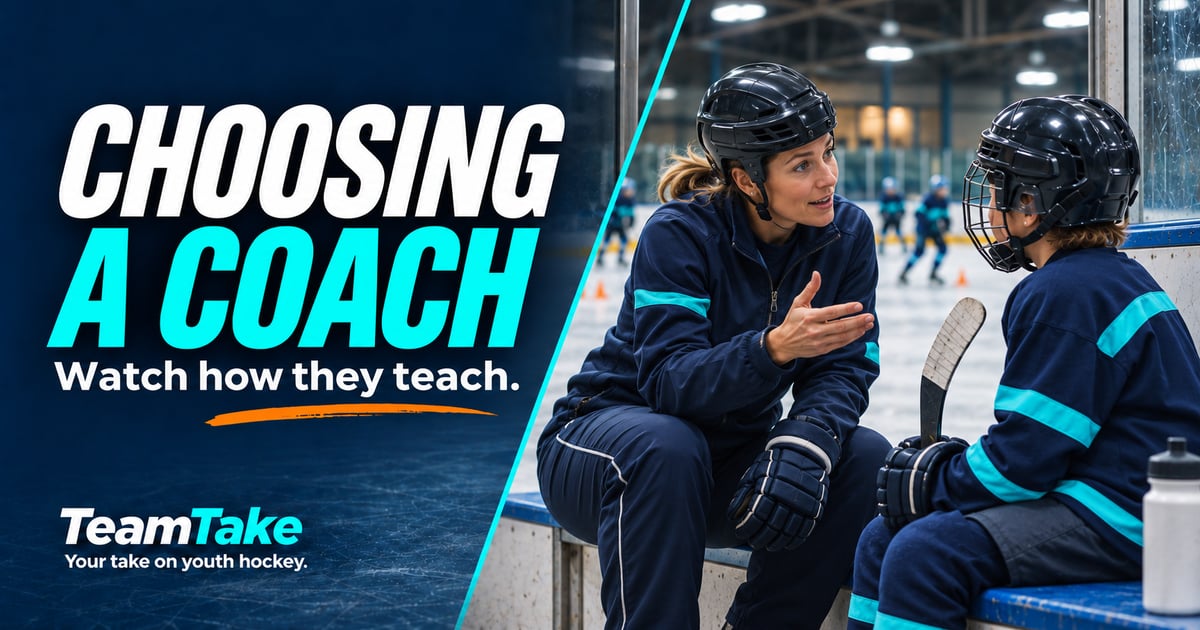
What to watch, who to ask, and what to get clear before accepting an offer.
A coach can have a great playing history and a winning team without being the right coach for your child. Before committing, find out how they teach, how they handle mistakes and what opportunity they actually have in mind for your player.
That matters even more when joining an academy means changing schools, paying substantial fees and making a commitment that may be difficult to leave.
1. Watch them coach before deciding
If possible, watch an ordinary practice and a game involving the coach's current team. A prospect skate can introduce the program, but a regular Tuesday may tell you more.
At practice, look for actual teaching. When a player struggles, does the coach explain or demonstrate the correction? Do developing players receive attention, or does most of it go to the strongest kids? Are goalies getting useful work and feedback, or mainly serving as targets?
During a game, watch what happens after a costly mistake. Does the player understand what to change? If they miss shifts, is there a clear reason and a way back into the game?
Pay particular attention when the team is losing. A demanding coach can remain clear, fair and respectful under pressure. Repeated insults or humiliation shouldn't be explained away as preparation for higher-level hockey.
Also notice whether expectations appear consistent. What happens when a leading scorer misses practice, takes a selfish penalty or treats a teammate badly? Different circumstances can justify different decisions, but ask how the coach explains them and handles decisions involving their own child.
One incident viewed from the stands won't tell you everything. Look for patterns and ask about anything you don't understand.
2. Adjust your questions to the age and level
The same expectations won't fit every team.
| Level or environment | What to investigate |
|---|---|
| U9/U11 and newer players | Clear instruction, patience, active practices and whether kids remain willing to make mistakes |
| House hockey | Meaningful participation, support for different abilities and expectations around other activities |
| Association rep | How players earn roles, how feedback is delivered, attendance expectations and how decisions involving parent coaches are reviewed |
| Private AAA and academies | The specific role offered, roster size, specialist coaching, school and training workload, fees and release terms |
| Older competitive players | Honest feedback, realistic progression opportunities and whether players can discuss their own development with the coach |
A higher level can bring tougher competition for roles. It doesn't remove the need to teach or communicate.
Also confirm who will actually run the team. A well-known coach pictured in the brochure may have a different role from the person leading most practices. For sanctioned BC programs, BC Hockey lists qualification requirements by role and level. Qualifications are a starting point; watch how the coach uses their knowledge.
3. Ask what the offer means for your child
Praise is encouraging, but "we love his game" doesn't explain whether your child will play regularly, compete for a limited role or mainly provide depth.
Recruiting also involves filling rosters and collecting fees. That doesn't make every compliment insincere, but enthusiastic praise should lead to a concrete conversation.
Ask:
- What made you interested in our player, and what do they need to improve?
- What role do you see for them at the beginning of the season?
- How many players at their position are you recruiting?
- How will they receive feedback if they lose ice time?
- Could more players be added after we commit?
For goalies, be especially direct: how many will be rostered, how are starts decided, and what changes for tournaments or playoffs? If one goalie is considered stronger, ask what a realistic game and development plan would look like for the other.
"Everyone competes" is a philosophy, not an explanation of likely opportunities. Ask how it worked with the previous team.
What does development look like beyond the strongest players?
A list of drafted alumni tells you where some players went, but not what the coach will do for your child. Ask for an example of helping a player who arrived behind the group, without needing that child's name. What did they work on, how was feedback delivered and how did they get opportunities to use it?
Ask how progress is reviewed during the season. A useful answer might describe individual check-ins, video or a few clear development priorities. You want to know how an ordinary player finds out whether they're improving, not just how the team celebrates its best results.
4. Agree who talks to whom
"Players should speak to me themselves" can be a reasonable expectation for an older player asking about a drill or their role. Ask how that works for a younger child, a quiet player or someone who has already tried without getting a useful answer.
Confirm the team's actual process rather than assuming every coach and manager divides responsibilities the same way:
- Player to coach: understanding a correction, asking what to improve and discussing their role.
- Parent to coach: expectations agreed before joining, recurring concerns, or helping a child who cannot resolve something themselves.
- Team manager: schedules, logistics and arranging meetings. A manager may help with communication, but usually doesn't decide lines or goalie starts.
- Program director or another designated contact: an unresolved concern involving the coach, particularly when the family needs someone outside the coaching staff to review it.
Before accepting, ask: "If my child doesn't understand why they're losing ice time, when and how should they approach you?" Then ask what happens if that first conversation doesn't resolve it.
Find out whether the coach schedules individual check-ins or waits for players to request them. A confident teenager may have no trouble speaking up; a quiet first-year U13 player may need help getting started. Ask whether a parent can attend a meeting to support the child, and whether the player can bring questions prepared in advance.
Growing independence is valuable, but a child shouldn't have to negotiate a promised development opportunity or deal with intimidating behaviour alone. They also shouldn't feel that a respectful question from their parent will cost them opportunities.
If the team has a waiting period for routine postgame discussions, learn the details. Also ask how to report an urgent health or safety concern without waiting for that routine process.
5. Ask about workload, injuries and school pressure
For an academy player, a week can include team practices, games, gym sessions, specialist development and schoolwork before the family adds any outside training. Ask to see the ordinary weekly schedule and how it changes around travel weekends.
Useful questions include:
- Who coordinates the total workload across the team, gym and specialist coaches?
- What outside training is expected, and what is optional?
- What happens when a player reports pain, unusual fatigue or needs recovery time?
- Who makes return-to-play decisions, and how does the coaching staff work with that person?
- How are exams, missed classes and important school commitments handled?
Listen for a practical answer about who helps and what changes, rather than an assumption that committed players will simply cope. Ask current families whether they could raise these concerns early without their child being treated as uncommitted.
For a younger association player, the same conversation may be about sleep, another sport or a school event. The schedule is different, but knowing the expectations before joining still helps.
6. Talk to parents, including families whose children had smaller roles
Ask several current and former families about the same coach. The leading scorer's parents and a family whose child struggled may describe very different seasons.
Useful questions include:
Did the season match what you were told before joining?
If your child wasn't getting opportunities, did they understand why and what they could do about it?
What happened when you raised a concern?
Ask which season, team and staff they experienced. Look for repeated, specific accounts rather than one glowing recommendation or one angry story.
If asking publicly feels uncomfortable, use private conversations or anonymous participation where available.
Places to start:
Public discussions under aliases, plus private team and organization discussions for verified members.
Facebook groups
- Elite AAA Hockey and Getting to Next Level
- Youth/Minor Hockey Parents
- Goalie Parents Canada
- Goalie Parents
Check each group's rules and recent activity; anonymous posting isn't available everywhere.
Reddit communities
Include the country, age and level so the answers apply to your situation.
Try a specific question: "How did this coach communicate with players who weren't getting much ice time?" Avoid posting children's names or details that unnecessarily identify them. An alias doesn't prevent people from recognizing a situation.
Online replies are leads to investigate, not proof of everything alleged.
7. Keep a record of important conversations
Before paying, get important commitments in writing: the team, coaching assignment, roster size, goalie arrangements, training, fees and what happens if those change.
After a meeting, send a brief recap:
Thanks for meeting. My understanding is that you're planning two goalies, with regular starts for both and a review of the rotation before playoffs. Please let me know if I've misunderstood.
A recap gives everyone a chance to correct the record while the conversation is fresh.
For important meetings, consider recording the conversation on your phone so you have an accurate record of what was said. In Canada, you can generally record a one-to-one or group conversation you're participating in without notifying the other participants or getting their permission.
Keep any recording secure, and follow up in writing about the agreed plan. Recording a conversation doesn't itself guarantee playing time or make every statement enforceable.
Hopefully you'll never need to revisit any of this. But a season is long, plans can change and people can remember conversations differently, so keeping a clear record now can save everyone a difficult discussion later.
8. Have a realistic Plan B before signing
Explore more than one suitable program before committing. Once you've accepted, understand the restrictions rather than assuming another coach's friendly invitation means you can move whenever you want.
For CSSHL, recruiting guidance addresses commitments, recruiting restrictions and written permission for in-season visits or skates. AP games also require proper eligibility and approvals. Maintain positive relationships, but don't sign conflicting commitments or treat occasional outside skates as an automatic escape route.
For families in the Lower Mainland, there are two different questions:
- Moving within sanctioned hockey: ask your association registrar about applicable PCAHA registration and player-movement requirements, deadlines and approvals. A place on another team isn't enough by itself. Start with the PCAHA rule book.
- Returning from non-sanctioned hockey: BC Hockey's policy generally makes someone who plays a non-sanctioned game after September 30 ineligible for its sanctioned programs for the rest of that season, including house hockey. Early reinstatement can be requested for special circumstances, but approval is discretionary. The restriction can remain even if the team folds or releases the player. See BC Hockey's policy.
"Private" or "academy" alone doesn't establish sanctioning status. Check the exact program.
Before signing, also ask what happens to fees and schooling if the player is released, the coach changes or the program adds another goalie. A refund, release and eligibility elsewhere are separate matters.
Your fallback might be a permitted transfer, a different plan next season, or stepping back while your child decides what they want. Find out what is genuinely available before relying on it.
9. If the season changes, address it early
Roles can change for legitimate hockey reasons. But if your child is barely playing, a third goalie arrives, or the experience differs substantially from what was discussed, request a meeting before the situation becomes the routine.
Bring the relevant messages, describe what has changed and ask for a specific plan and review date. If it cannot be resolved, find out who outside the coaching staff can review the concern.
Keep hockey disagreements separate from treatment concerns. A coach may disagree about a player's readiness; insults or humiliation shouldn't be dismissed as the child being "too soft."
Before joining, also ask about the parts of team life away from the bench: dressing rooms, player group chats and travel. Who supervises where appropriate, how is repeated exclusion or bullying addressed, and who can a child approach privately? Ask what happens if the concern involves a captain or a leading player. A team that expects players to work through ordinary disagreements still needs a way to help when one child is repeatedly targeted.
The goal is to choose a coach who can challenge your child while giving them clear instruction, honest expectations and a reasonable way to raise concerns. Your child's confidence and willingness to keep playing matter alongside the level printed on the jersey.
What do you wish you'd asked before joining your last team?
LightDove473 ·
Best coach my son had never played anywhere impressive. He could explain the same thing three different ways until the kid understood, which turned out to be more useful than a fancy playing resume.
MistyFinch397 ·
Ask parents in February, everyone loves the coach in September lol.
PoliteGoose954 ·
In reply to MistyFinch397
And ask someone whose kid isn't on the first line. Not saying their version is automatically right either, but you'll probably hear a different side of things.
SereneCrane235 ·
I think parents sometimes confuse a demanding coach with a bad one. Our U15 coach is pretty direct and my kid doesn't love every conversation, but he always knows what he needs to work on. He's improved a lot this year.
CuriousLark432 ·
In reply to SereneCrane235
agreed, but there's direct and there's calling a 12 year old useless infront of his teammates. Had that defended to us as "getting them ready for the next level" and i'm still not buying it.
SereneCrane235 ·
In reply to CuriousLark432
No argument there. Ours will stop a drill and make them do it again, but I've never heard him insult a kid. Big difference.
PoliteGoose954 ·
The Plan B section is useful, but realistically ours would've meant losing a chunk of the fees and possibly not playing anywhere else that season. We stayed longer than we should have because we kept thinking about what we'd already paid. In hindsight my son was miserable and we were paying either way.
MistyFinch397 ·
Get the important stuff in writing. We asked about something the coach had told us before signing and got "I don't remember saying that, there are 18 of you." Maybe he genuinely didnt remember, but we had made a pretty expensive decision based on that conversation.
SereneCrane235 ·
In reply to MistyFinch397
I get keeping a record, but pulling out a phone to record the first meeting would feel a bit confrontational to me. I'd rather send an email afterwards and give them a chance to clarify.
MistyFinch397 ·
In reply to SereneCrane235
Yeah I wouldn't start every chat with the voice recorder out. But after you've had two different versions of the same conversation, you get less worried about seeming awkward. An email recap is a good start, I'd just want an actual answer on the important points before paying.
CuriousLark432 ·
Has anyone actually posted an honest negative review of a coach under their own name? Did it affect their kid getting offers the next season? I'd like to warn other families but hockey feels like a pretty small world, especially once you're looking at academies.
LightDove473 ·
In reply to CuriousLark432
Thats exactly why we kept quiet until we'd left, and even then I mostly spoke to parents privately. No idea whether it would've affected future offers, but I didn't want my kid finding out the hard way. Anonymous helps, though if you describe a very specific situation people can still figure out who you are.
PoliteGoose954 ·
In reply to CuriousLark432
I did once, after the coach insulted my kid in front of the team. As far as I could tell he was just in a bad mood, my son hadn't even done anything. I asked to speak to him afterwards and he started yelling at me too, so I wrote about what happened. We moved on the following season and it didnt seem to affect our options.