TeamTake editorial
When the Puck Goes In: Helping Young Goalies Learn Without Blame
KindPuffin723 · Published · Updated
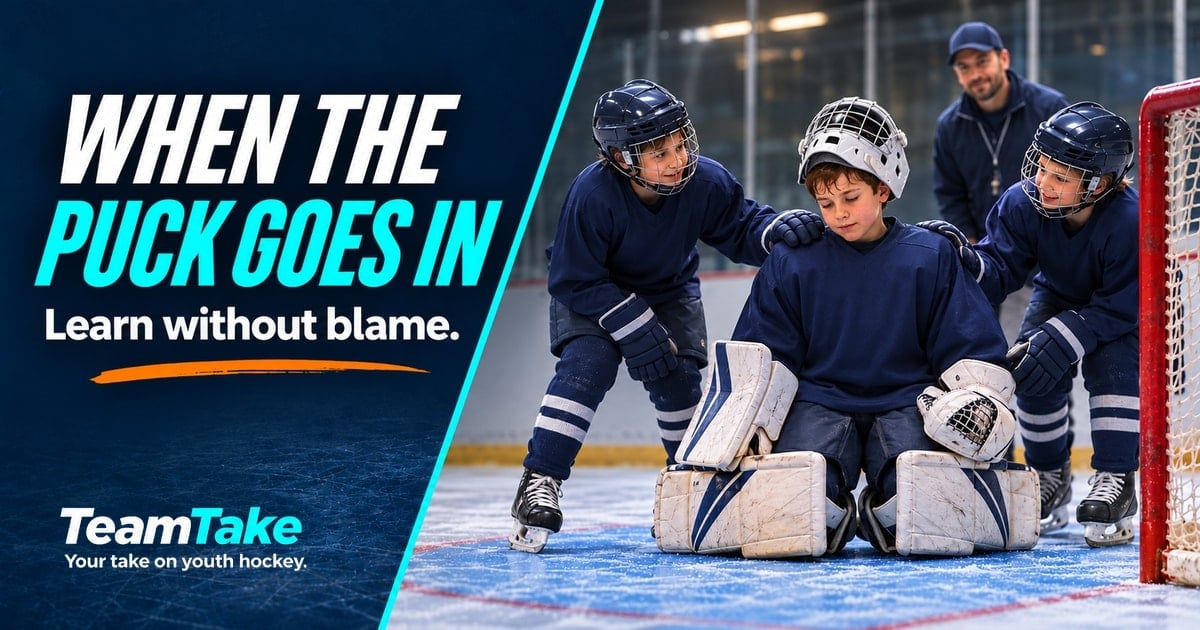
A practical guide to what parents, coaches and teammates can do after a tough goal or game.
The puck goes in and everyone looks at the goalie. Sometimes the goalie made a mistake. Sometimes the play started with a turnover, a screen or an open player in front. Often it was a mix of things.
A young goalie needs honest feedback and a chance to improve. They also need to know that one goal, or one bad game, doesn't decide whether they belong on the team. Here's how to help them learn without turning every goal against into a blame session.
Start with the play, not the score
Goals against and save percentage can be useful over time, but neither tells the whole story of one game. A goalie who lets in two goals on 40 shots had a different night from one who faced 15 shots, even if the scoreboard makes the first game look better. The number still doesn't tell you whether the shots were screened, deflected or taken from the slot.
When reviewing a goal, start with a few simple questions: Could the goalie see the puck? Where did the dangerous chance come from? Was there a rebound or a pass across? What did the goalie do well on the play, and what could they try differently next time?
That gives a coach something specific to work on. Saying "you cost us the game" gives a child nothing useful to practise. A better correction might be, "You were deep on that shot. Let's work on your depth and getting set before the pass."
Goalies should own the parts of their game they can improve, just like skaters do. But responsibility for one goal is not the same as responsibility for the team's result.
Make a reset routine before the game
A goalie has to get ready for the next shot while the last one is still fresh. Hockey Canada recommends having a short plan for what to do after a difficult goal, then shifting attention back to the game. That plan is more useful if the goalie has practised it before they need it.
Keep it simple and let the player choose what works. It could be one slow breath, a tap on the post and a cue like "next shot." Some goalies want a teammate's quick glove tap; others want everyone to get back to the faceoff and leave them alone for a moment. Ask them outside the game instead of guessing in the heat of it.
For a younger goalie, a coach might offer one calm reminder and help them find their stance again. Older players may want to review what happened between periods or after the game. The point is to help them get ready, not to insist that they act cheerful or pretend they aren't frustrated.
If the goalie wants to talk about the technical part right away, keep it to one useful point. Save the longer breakdown for practice, when a goalie coach can help them work through it.
Coaches set the tone
Coaches can hold goalies accountable without making them the team's scapegoat. Give clear feedback about a decision or skill, and review the rest of the play too. If the goalie is pulled, explain the change in a calm way and check in with them later. A goalie change can be about the game, workload or giving a player a chance to reset; it doesn't have to be used as public punishment.
Goalie development also happens during team practice. USA Hockey's guidance on building confidence in the crease emphasizes involving goalies in the team and keeping communication open. If a drill sends a young goalie a long stream of shots, build in a chance to rest and reset. Quality repetitions are more useful than having a tired goalie face one shot after another.
A parent who isn't sure about a technical mistake can ask the coach, "What did you see on that play, and what would you like them to work on this week?" That's more likely to lead to a useful conversation than arguing about who was at fault in the parking lot.
Teammates can help without making a show of it
A tap on the pads or a quick "we've got you" can be kind, but not every goalie wants attention after a goal. Teams can talk about it when things are calm and agree on what feels supportive.
What usually makes things worse is pointing at a goalie, throwing up arms or bringing the goal up in the dressing room. The same goes for a goalie blaming a defender after every chance. Teammates can review what each person could do differently without taking cheap shots at each other.
The ride home doesn't need a game review
Parents often want to explain what happened, especially when their child is upset. But the drive home can be a bad time for a technical breakdown. The Association for Applied Sport Psychology recommends listening and giving young athletes room to decide when they want to discuss their performance.
Try asking, "Want to talk about the game now, or leave it for tomorrow?" If they want to talk, listen before offering your take. If they don't, let the conversation go for now. If they say, "I cost us the game," you can acknowledge that it feels awful while reminding them one play doesn't define them.
Avoid blaming the defenders or coach just to make your child feel better. If your goalie asks for technical advice, try, "Let's write down what you're wondering and ask your goalie coach." That's a lot easier on everyone than a full game breakdown from the passenger seat.
Notice a pattern and ask for help
Being disappointed after a goal or a loss is normal. Pay more attention if your child regularly dreads games, is afraid to make a mistake, feels singled out by teammates or coaches, or stops enjoying hockey altogether.
Start by asking what the child thinks is going on, without deciding the cause in advance. If it seems connected to feedback or team behaviour, request a calm conversation with the coach or the appropriate team contact. Ask for a specific example of what the goalie can work on and what support will be available.
If the distress keeps going or starts affecting other parts of life, consider support from a qualified mental health or sport psychology professional. That doesn't mean something is wrong with the player; it gives them and the family another person to talk to.
Questions to ask before joining a team
A goalie parent's practical questions can be simple:
- Who gives the goalie specific instruction, and how often?
- How does the head coach communicate with the goalies?
- What happens after a difficult game or a goalie change?
- How does the team handle criticism between players?
The details will look different in U9 house hockey, U13 rep and an older academy program. A younger player may need short, encouraging reminders and lots of chances to learn. An older player can take on more of the conversation and help shape their own development plan. At every age, useful feedback should tell them what to work on, and mistakes should not decide whether they feel they belong.
The aim isn't to tell a young goalie that every goal was someone else's fault. It's to help them see what they can learn, get ready for the next shot and know their team still has their back.
Further reading
- Hockey Canada: How to recover from a bad goal
- USA Hockey: Building confidence in the crease
- Association for Applied Sport Psychology: Eight tips for communicating after a game
- Association for Applied Sport Psychology: Our words matter
TeamTake Editorial | November 21, 2026
KindRobin528 ·
One thing that helped our U11 was agreeing in the car before the game that I wouldn't ask about goals or shots. Afterward I just ask if he wants food, company or quiet. If he brings up a goal, I'll listen.
SteadySeal688 ·
In reply to KindRobin528
we have a next morning rule too. My kid will talk about it once he's slept, but right after the game he just wants to get out of the rink lol.
BrightSeal743 ·
As a coach, I ask goalies what they want after a goal goes in. Some like a quick tap on the pads, some want a short check-in, and some want everyone to just get ready for the faceoff. It can change by kid.
EvenRobin641 ·
In reply to BrightSeal743
We asked our daughter before the season and she said glove tap only if she looks over. The team actually remembers, so nobody has to guess in the moment.
CozySquirrel750 ·
In reply to EvenRobin641
Our kid wants no taps at all, just get back to the faceoff. I didn't realize how much he hated everyone looking at him until we asked.
EvenPanda256 ·
I'm glad the article says accountability still matters. I don't want adults telling my kid every goal was impossible because there was a turnover first. He wants honest feedback, just not a lecture in the car or a teammate blaming him in the room.
MistyTurtle229 ·
In reply to EvenPanda256
Yep, you can say he was late getting set without telling him he lost the game. Those are very different things.
CoolSparrow208 ·
The practice volume part is real. Our U11 used to face shot after shot in one drill, and after a while he was just guessing and getting frustrated. Now the coach rotates the goalie out for a few reps, lets them reset, then they jump back in. The skaters keep moving and the goalie is actually tracking the puck again.